
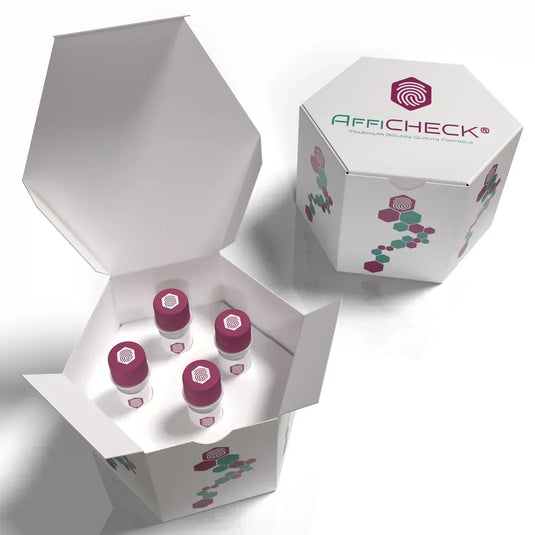
DNA PCR quantitative positive controls are essential reagents used in molecular biology laboratories to verify the performance and reliability of quantitative polymerase chain reaction (qPCR) assays. These control materials provide known DNA templates that ensure amplification systems are functioning correctly and producing expected signal outputs.
In quantitative PCR workflows, positive controls serve as reference standards that allow researchers to confirm assay sensitivity, amplification efficiency, and reproducibility across experimental runs. By including a quantitative positive control, laboratories can validate assay conditions and maintain consistency in nucleic acid detection experiments.
Educational introductions to PCR technology and nucleic acid amplification methods can be explored through the National Human Genome Research Institute at
https://www.genome.gov/about-genomics/fact-sheets/Polymerase-Chain-Reaction-Fact-Sheet.
Additional molecular biology explanations of PCR methods are available through the National Center for Biotechnology Information (NCBI) at
https://www.ncbi.nlm.nih.gov/books/NBK22344/.
These resources describe how PCR amplification enables scientists to detect and quantify specific DNA sequences.

Understanding Quantitative PCR (qPCR)
Quantitative polymerase chain reaction, often referred to as qPCR or real-time PCR, is a molecular technique used to measure the quantity of DNA present in a sample. Unlike conventional PCR, which simply amplifies DNA fragments, qPCR monitors amplification in real time using fluorescent detection systems.
Fluorescent dyes or probes emit signals proportional to the amount of amplified DNA, allowing researchers to determine DNA concentration during each amplification cycle.
Detailed explanations of real-time PCR technology are available through NIH molecular biology resources at
https://www.ncbi.nlm.nih.gov/books/NBK279690/.
Further educational descriptions of PCR principles can be found through University of Utah genetics learning materials
https://learn.genetics.utah.edu/content/labs/pcr/ and Harvard University genomics education programs
https://genome.med.harvard.edu/.
These academic resources provide foundational knowledge about PCR amplification mechanisms and detection strategies.
Role of Quantitative Positive Controls in PCR Experiments
Quantitative positive controls contain known concentrations of target DNA sequences. When included in PCR assays, they allow researchers to confirm that the amplification system is functioning correctly.
A positive control ensures that the following components are performing as expected:
-
DNA polymerase activity
-
Primer binding efficiency
-
Reaction buffer conditions
-
Thermocycler performance
-
Detection chemistry
Educational resources describing PCR quality control principles are available through the Centers for Disease Control laboratory training programs
https://www.cdc.gov/labtraining/ and the National Institutes of Health research resources
https://www.nih.gov/.
These references highlight the importance of controls in maintaining reliability and reproducibility in molecular assays.
Characteristics of DNA PCR Quantitative Positive Controls
High-quality quantitative positive controls exhibit several important characteristics that make them suitable for molecular assays.
Known DNA Concentration
Quantitative controls contain precisely measured DNA concentrations that allow calibration of amplification signals.
Sequence Specificity
The control template typically contains the exact target sequence recognized by the PCR primers.
Stability and Reproducibility
Well-designed controls remain stable during storage and produce consistent amplification results across multiple experiments.
Educational discussions of nucleic acid standards and reference materials are available through the National Institute of Standards and Technology (NIST) at
https://www.nist.gov/ and the National Library of Medicine research resources
https://www.ncbi.nlm.nih.gov/pmc/.
These resources explain the importance of reference materials in molecular biology experiments.
Applications of DNA PCR Quantitative Positive Controls
DNA PCR quantitative positive controls are used across many molecular biology and genomics research applications.
Assay Validation
Positive controls help verify that PCR reactions are functioning correctly during assay development and validation experiments.
Educational explanations of assay validation approaches can be found through NIH research methodology resources
https://www.nih.gov/research-training.
Standard Curve Generation
In quantitative PCR experiments, positive controls with known DNA concentrations can be used to generate standard curves. These curves allow researchers to calculate the quantity of DNA present in unknown samples.
Further explanations of standard curve analysis are available through NCBI molecular biology textbooks
https://www.ncbi.nlm.nih.gov/books/NBK555922/.
Amplification Efficiency Assessment
PCR amplification efficiency is a critical parameter in qPCR experiments. Positive controls allow researchers to evaluate amplification performance across different reaction conditions.
Additional resources describing PCR efficiency calculations can be explored through Stanford University genomics resources
https://med.stanford.edu/genomics.html.
Molecular Diagnostics Research
Quantitative positive controls are frequently used in research settings that involve nucleic acid detection technologies.
Educational introductions to molecular diagnostic technologies are available through the National Institute of General Medical Sciences
https://www.nigms.nih.gov/.
Components of a Typical qPCR Reaction
A standard quantitative PCR experiment includes several molecular components required for DNA amplification.
DNA Template
The target DNA sequence that will be amplified during the PCR reaction.
Primers
Short DNA oligonucleotides that define the boundaries of the amplification region.
DNA Polymerase
A thermostable enzyme responsible for synthesizing new DNA strands.
Fluorescent Detection Chemistry
Fluorescent probes or dyes allow real-time monitoring of DNA amplification.
Detailed descriptions of PCR reaction chemistry can be found through the National Library of Medicine molecular biology chapters
https://www.ncbi.nlm.nih.gov/books/NBK21154/.

Workflow of a Quantitative PCR Experiment
A typical qPCR experiment follows several steps.
1. Reaction Setup
PCR reagents, primers, template DNA, and controls are combined in reaction wells.
2. Thermal Cycling
The thermocycler repeatedly heats and cools samples to enable DNA denaturation, primer annealing, and strand extension.
3. Fluorescent Signal Detection
Fluorescent signals are measured during each amplification cycle.
4. Data Analysis
Amplification curves are analyzed to determine DNA quantity.
Further explanations of qPCR data interpretation are available through NCBI research publications
https://www.ncbi.nlm.nih.gov/pmc/.
Importance of Positive Controls in Molecular Biology Workflows
Positive controls play a critical role in ensuring the accuracy and reliability of PCR experiments. By confirming that amplification reagents and thermocycler conditions are functioning correctly, positive controls help maintain consistency in molecular biology research.
Educational discussions of experimental reproducibility and laboratory quality control can be explored through NIH research integrity resources
https://www.nih.gov/research-training.
University molecular biology programs also provide guidance on laboratory controls, such as those described by Johns Hopkins University research training programs
https://www.hopkinsmedicine.org/research/.
Conclusion
DNA PCR quantitative positive controls provide reliable reference standards for quantitative PCR experiments. By including known DNA templates in PCR reactions, researchers can verify assay performance, evaluate amplification efficiency, and ensure reproducible results.
In modern molecular biology laboratories, positive controls remain essential components of nucleic acid detection workflows. Their role in assay validation, standard curve generation, and quality control helps maintain accuracy in PCR-based research and genomics studies.
DNA PCR quantitative positive control
qPCR positive control DNA
PCR assay control template
quantitative PCR reference standard
DNA amplification control
qPCR calibration standard
PCR detection control DNA
molecular biology PCR controls