
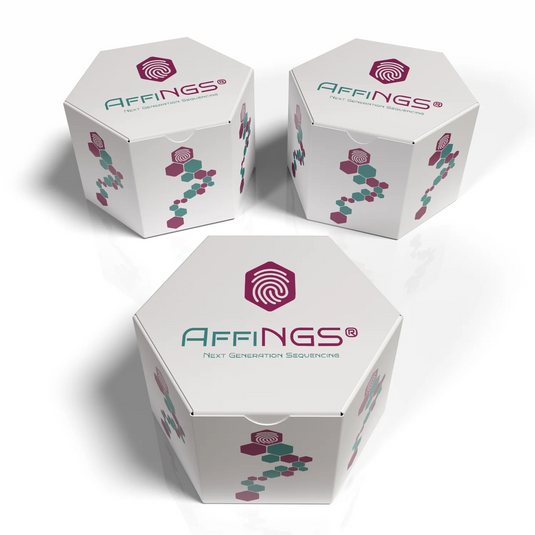
The OnePot II DNA Library Prep Kit for MGI platforms provides a simplified and efficient solution for preparing DNA sequencing libraries used in next-generation sequencing (NGS) workflows. Library preparation is a critical step in sequencing experiments because it converts fragmented DNA into adapter-ligated molecules compatible with sequencing instruments.
Modern sequencing workflows require library preparation methods that are reproducible, efficient, and compatible with high-throughput genomics platforms. The OnePot II library preparation approach integrates multiple enzymatic steps into a streamlined protocol, allowing researchers to generate sequencing-ready libraries with reduced handling steps and optimized reaction conditions.
Next-generation sequencing technologies have transformed genomics research by enabling high-throughput DNA analysis across numerous applications including genome assembly, transcriptomics, and metagenomics. Foundational explanations of sequencing technologies are available through the National Human Genome Research Institute (NHGRI) at
https://www.genome.gov/about-genomics/fact-sheets/DNA-Sequencing-Fact-Sheet.
Educational introductions to sequencing methodologies are also available through the National Center for Biotechnology Information (NCBI) at
https://www.ncbi.nlm.nih.gov/books/NBK21134/ and through NIH genomics research resources at
https://www.nih.gov/.
These resources explain the principles of sequencing technologies and their applications in molecular biology research.

Understanding DNA Library Preparation in Sequencing Workflows
DNA library preparation involves converting fragmented DNA into a collection of molecules that contain sequencing adapters compatible with sequencing instruments. These adapter-ligated fragments form the sequencing library used in downstream sequencing runs.
The typical library preparation workflow includes several key steps:
-
DNA fragmentation
-
End repair and A-tailing
-
Adapter ligation
-
Library amplification
-
Library purification and quality assessment
Educational descriptions of sequencing library construction can be explored through the NCBI Bookshelf molecular biology chapters at
https://www.ncbi.nlm.nih.gov/books/NBK21091/.
Additional explanations of genomic library preparation workflows are available through Harvard University genomics education resources
https://genome.med.harvard.edu/ and the University of Washington genome sciences department
https://www.gs.washington.edu/.
These academic resources describe how DNA libraries enable sequencing platforms to read nucleotide sequences in high-throughput formats.
Overview of the OnePot II DNA Library Preparation Strategy
Traditional library preparation methods often involve multiple separate enzymatic reactions and purification steps. These multi-step procedures can increase processing time and sample handling requirements.
The OnePot II library preparation strategy simplifies this workflow by combining enzymatic reactions into a single reaction environment. Integrating multiple steps into a unified protocol helps streamline sequencing library preparation and reduces experimental complexity.
In molecular biology laboratories, simplified workflows are particularly beneficial when preparing libraries for high-throughput sequencing experiments.
Additional educational explanations of enzymatic library preparation strategies can be found through MIT biological engineering research resources
https://be.mit.edu/ and Stanford University genomics education programs
https://med.stanford.edu/genomics.html.
These academic programs discuss the biochemical principles behind enzymatic reactions used in sequencing library preparation.
Compatibility with MGI Sequencing Platforms
MGI sequencing platforms are widely used in genomics laboratories for high-throughput DNA sequencing. These sequencing systems utilize patterned arrays and combinatorial probe-anchor synthesis methods to generate large volumes of sequencing data.
Educational explanations of sequencing platform technologies are available through NHGRI genome sequencing resources
https://www.genome.gov/genetics-glossary/Sequencing.
Additional discussions of sequencing technology development are available through NIH genomic technology programs
https://www.genome.gov/research-at-nhgri.
University research groups also provide detailed discussions of sequencing systems, such as the Yale Center for Genome Analysis
https://medicine.yale.edu/ycga/ and the Johns Hopkins genomics research programs
https://www.hopkinsmedicine.org/research/.
These resources explain how sequencing libraries are prepared and processed on high-throughput sequencing instruments.
Key Features of the OnePot II DNA Library Prep Kit
The OnePot II DNA Library Prep Kit integrates several important features that support efficient sequencing library construction.
Simplified Reaction Workflow
Combining multiple enzymatic reactions into a single workflow reduces sample handling and streamlines library preparation protocols.
Reduced Processing Time
Integrated enzymatic steps shorten the time required to prepare sequencing libraries, enabling faster experimental workflows.
Consistent Library Construction
Standardized reaction conditions help produce consistent libraries across different experimental runs.
Compatibility with Genomic DNA Samples
The library preparation workflow can be applied to genomic DNA extracted from a variety of biological samples.
Educational discussions of genomic DNA preparation and sequencing workflows are available through NCBI genome analysis resources
https://www.ncbi.nlm.nih.gov/books/NBK569842/.
Applications of DNA Library Preparation in Genomics Research
DNA library preparation kits support numerous sequencing applications across life science research.
Whole Genome Sequencing
Whole genome sequencing allows researchers to analyze the entire DNA sequence of an organism. Library preparation is essential for generating sequencing-ready DNA fragments.
Educational resources on genome sequencing projects are available through the National Human Genome Research Institute
https://www.genome.gov/human-genome-project.
Metagenomics Studies
Metagenomics research analyzes genetic material from environmental samples containing diverse microbial communities. DNA library preparation enables sequencing of mixed DNA samples.
Further explanations of metagenomics can be explored through the National Center for Biotechnology Information
https://www.ncbi.nlm.nih.gov/books/NBK6833/.
Population Genomics
Population genomics studies examine genetic variation across populations of organisms. Sequencing libraries allow researchers to analyze genomic diversity at large scales.
Additional resources discussing genomic variation studies are available through NIH genomics research programs
https://www.genome.gov/genomics-fact-sheets.
Functional Genomics
Functional genomics research investigates how genes and regulatory elements contribute to biological functions. Sequencing technologies provide powerful tools for studying genomic activity.
Educational explanations of functional genomics are available through NCBI genomics education resources
https://www.ncbi.nlm.nih.gov/books/NBK20263/.

Advantages of Integrated Library Preparation Kits
Integrated DNA library preparation kits offer several advantages in modern sequencing workflows.
Improved Efficiency
Combining enzymatic reactions into a single workflow simplifies experimental procedures.
Reduced Sample Loss
Minimizing purification steps helps preserve DNA sample integrity.
Scalability for High-Throughput Experiments
Integrated workflows can be adapted to high-throughput sequencing pipelines.
Educational discussions of high-throughput sequencing methods are available through NCBI next-generation sequencing resources
https://www.ncbi.nlm.nih.gov/books/NBK53789/.
Importance of Library Preparation in Modern Genomics
DNA library preparation represents a fundamental step in sequencing experiments. By converting DNA molecules into adapter-ligated sequencing templates, library preparation enables sequencing instruments to analyze genomic information.
Advances in library preparation technologies continue to improve sequencing efficiency and throughput. These innovations support research in genomics, biotechnology, and molecular biology.
Additional discussions of sequencing technology evolution can be explored through NIH genomic technology programs
https://www.genome.gov/research-at-nhgri and University genomics research initiatives such as
https://genomics.stanford.edu/.
Conclusion
The OnePot II DNA Library Prep Kit for MGI platforms provides a streamlined solution for preparing sequencing libraries in modern genomics workflows. By integrating multiple enzymatic steps into a simplified protocol, this library preparation strategy helps researchers generate sequencing-ready DNA libraries efficiently and consistently.
As next-generation sequencing continues to expand across genomics, metagenomics, and molecular biology research, optimized library preparation methods remain essential for enabling accurate and high-throughput DNA sequencing experiments.
OnePot II DNA Library Prep Kit for MGI
MGI DNA library preparation kit
NGS library preparation kit
DNA sequencing library preparation
MGI sequencing library prep
next-generation sequencing library kit
DNA library construction kit
genomic DNA library preparation