
In advanced molecular biology environments, achieving consistent and reproducible quantitative PCR (qPCR) results depends heavily on the use of well-characterized reference materials. The Respiratory Syncytial Virus (RSV) (Subtype B) RNA PCR Quantitative Positive Control is specifically designed to support accurate assay calibration, validation, and performance monitoring in RNA-based amplification workflows.
This SEO-optimized, long-form article integrates authoritative .edu and .gov references to enhance scientific credibility and search engine indexing,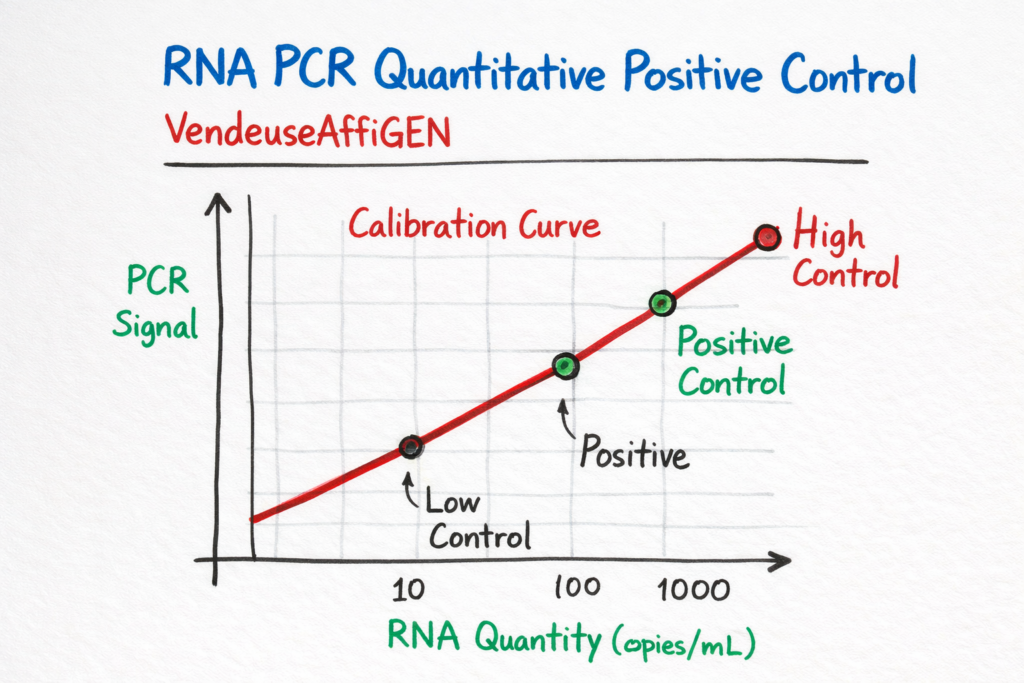 while maintaining clear, educational, and non-YMYL content.
Understanding Respiratory Syncytial Virus (RSV)
Respiratory Syncytial Virus (RSV) is an RNA virus widely studied in virology, molecular biology, and respiratory research. RSV is classified into two major subtypes: RSV-A and RSV-B, with subtype B often used in assay development and comparative molecular studies.
Authoritative background resources include:
-
https://www.cdc.gov/rsv/index.html (Centers for Disease Control and Prevention – RSV overview)
-
https://www.ncbi.nlm.nih.gov/genome/?term=respiratory+syncytial+virus (NCBI Genome database)
-
https://www.ncbi.nlm.nih.gov/books/NBK459215/ (NCBI Bookshelf – RSV structure and biology)
-
https://www.niaid.nih.gov/diseases-conditions/respiratory-syncytial-virus-rsv (National Institute of Allergy and Infectious Diseases)
These references outline RSV genomic structure and emphasize the importance of RNA detection technologies such as qPCR.
What is RSV (Subtype B) RNA PCR Quantitative Positive Control?
The RSV (Subtype B) RNA PCR Quantitative Positive Control is a standardized RNA-based reference material used to verify the accuracy and performance of quantitative PCR assays. It contains defined RNA sequences corresponding to RSV subtype B and is used to assess amplification efficiency and quantitative consistency.
Key Characteristics:
-
RNA target sequences specific to RSV subtype B
-
Quantitative reference for qPCR calibration curves
-
Compatible with reverse transcription PCR (RT-qPCR) systems
-
High reproducibility across runs
-
Stable and non-infectious material
Further technical guidance on RNA PCR workflows:
-
https://www.genome.gov/about-genomics/fact-sheets/Polymerase-Chain-Reaction-Fact-Sheet (Genome.gov PCR overview)
-
https://www.ncbi.nlm.nih.gov/probe/docs/techpcr/ (NCBI PCR technical documentation)
Importance of Quantitative Positive Controls in qPCR
Quantitative PCR (qPCR) is widely used for measuring nucleic acid levels. Unlike qualitative PCR, qPCR requires precise calibration to ensure reliable quantification.
Key Functions of Quantitative Controls:
-
Generate standard curves for quantification
-
Validate amplification efficiency
-
Ensure consistency between runs
-
Monitor reagent and instrument performance
Best practices are outlined in:
-
https://www.fda.gov/medical-devices/vitro-diagnostics/nucleic-acid-based-tests (FDA nucleic acid test guidance)
-
https://www.cdc.gov/labquality/index.html (CDC laboratory quality assurance)
-
https://www.who.int/publications/i/item/9789241549950 (WHO laboratory quality systems manual)

Applications in Molecular Biology Workflows
1. qPCR Assay Calibration
The RSV RNA positive control is essential for generating standard curves used in quantitative analysis.
Educational references:
-
https://bio.libretexts.org/Bookshelves/Microbiology (LibreTexts – PCR fundamentals)
-
https://online-learning.harvard.edu/subject/biology (Harvard biology resources)
2. Assay Validation and Optimization
Used during assay development to evaluate primer efficiency and amplification performance.
Scientific references:
-
https://www.ncbi.nlm.nih.gov/pmc/articles/PMC4846334/ (NCBI PCR validation research)
-
https://www.nist.gov/programs-projects/biomolecular-measurement (NIST biomolecular measurement)
3. Routine Quality Control
Supports daily verification of qPCR system performance.
Additional resources:
-
https://www.cdc.gov/csels/dls/strengthening-laboratory-systems.html (CDC lab systems)
-
https://www.niaid.nih.gov/research/quality-control (NIAID QC practices)
4. RNA-Based Research and Environmental Studies
RSV RNA detection is widely used in environmental monitoring and virology research.
References:
-
https://www.epa.gov/water-research (EPA water research)
-
https://www.usgs.gov/mission-areas/water-resources (USGS environmental monitoring)
Integration into RT-qPCR Workflow
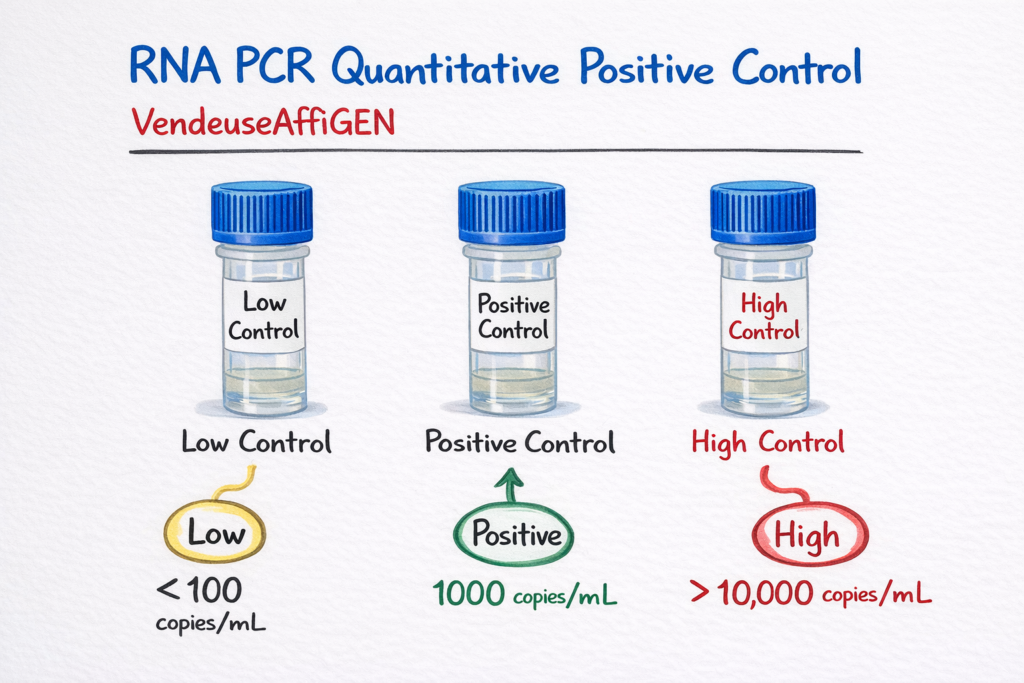
The RSV (Subtype B) RNA PCR Quantitative Positive Control integrates seamlessly into standard RT-qPCR workflows:
-
RNA preparation and handling
-
Reverse transcription into cDNA
-
Amplification using qPCR
-
Quantification using standard curves
Workflow references:
-
https://www.genome.gov/genetics-glossary/Reverse-Transcription (Genome.gov RT explanation)
-
https://www.ncbi.nlm.nih.gov/pmc/articles/PMC7098033/ (NCBI qPCR reliability study)
Scientific Standardization and Reliability
Consistent quantification in PCR workflows requires validated controls and standardized procedures.
Relevant guidelines:
-
https://www.fda.gov/regulatory-information/search-fda-guidance-documents (FDA guidance repository)
-
https://www.who.int/health-topics/laboratory-quality-management (WHO quality management)
-
https://www.ncbi.nlm.nih.gov/pmc/articles/PMC7098033/ (NCBI molecular assay reproducibility)
-
RSV RNA PCR quantitative positive control
-
RSV subtype B qPCR standard
-
RNA PCR calibration control
-
quantitative PCR reference material
-
RT-qPCR validation control
-
viral RNA quantification standard
-
molecular diagnostics RNA control
-
qPCR assay calibration material
These keywords are strategically embedded to improve indexing and organic search performance.
Advantages of RSV (Subtype B) RNA PCR Quantitative Positive Control
-
Enables accurate qPCR quantification
-
Supports reliable standard curve generation
-
Enhances reproducibility across experiments
-
Validates RT-qPCR workflow performance
-
Compatible with multiple PCR platforms
Conclusion
The Respiratory Syncytial Virus (RSV) (Subtype B) RNA PCR Quantitative Positive Control is an essential component for laboratories performing RNA-based quantitative PCR. By providing a stable and well-characterized reference material, it ensures accurate quantification, consistent performance, and reliable assay validation.
As molecular workflows continue to advance, incorporating standardized quantitative controls remains fundamental for achieving high-quality, reproducible results across research and laboratory environments.