
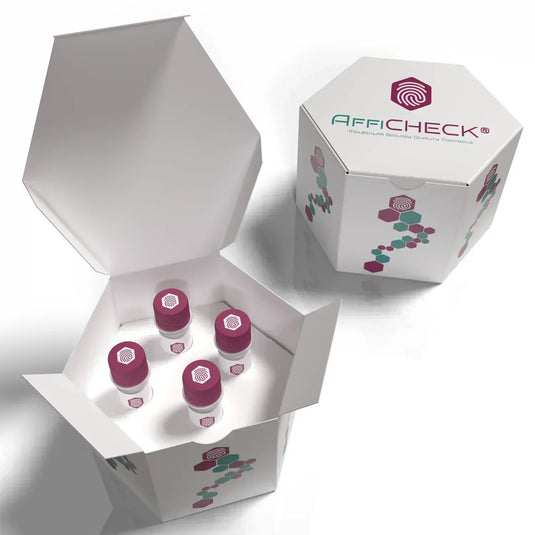
A Salmonella typhi DNA PCR Quantitative Positive Control is an essential reagent used in molecular biology laboratories to verify the performance and accuracy of PCR-based detection systems. Positive control materials contain defined DNA templates corresponding to Salmonella typhi genomic sequences, allowing researchers to confirm that amplification reactions are functioning properly during experimental workflows.
Polymerase chain reaction (PCR) technology has become one of the most widely used tools for detecting and analyzing nucleic acids in microbiology and molecular biology research. Quantitative positive controls help ensure consistent amplification signals and provide reliable reference standards for assay optimization and quality assurance.
Educational introductions to PCR amplification principles can be explored through the National Human Genome Research Institute educational resource:
https://www.genome.gov/about-genomics/fact-sheets/Polymerase-Chain-Reaction-Fact-Sheet
Additional explanations of nucleic acid amplification methods are available in the National Center for Biotechnology Information molecular biology textbook chapters:
https://www.ncbi.nlm.nih.gov/books/NBK22344/
These academic resources describe how PCR amplification enables sensitive detection and measurement of specific DNA sequences.

Overview of Salmonella typhi in Microbiology Research
Salmonella typhi is a bacterium frequently studied in microbiology, molecular genetics, and pathogen-host interaction research. Scientists analyze Salmonella typhi DNA to understand bacterial genetics, evolutionary relationships, and molecular mechanisms associated with microbial physiology.
Educational descriptions of Salmonella species and bacterial genomics can be explored through the Centers for Disease Control and Prevention research information pages:
https://www.cdc.gov/salmonella/
Further microbiology resources are available through the National Institutes of Health molecular biology archives:
https://www.nih.gov/
Detailed genomic information about Salmonella typhi can also be accessed through the National Library of Medicine database at:
https://www.ncbi.nlm.nih.gov/genome/
University-based microbiology programs also provide extensive learning materials about bacterial genetics, such as the Harvard Medical School microbiology education resources:
https://hms.harvard.edu/
and the Stanford University School of Medicine genomics research pages:
https://med.stanford.edu/genomics.html
These academic resources highlight the importance of bacterial DNA analysis in molecular biology studies.
Principles of Quantitative PCR Detection
Quantitative PCR (qPCR), also called real-time PCR, is a molecular technique used to amplify and measure DNA molecules simultaneously. Fluorescent probes or dyes emit signals proportional to the amount of amplified DNA during each amplification cycle.
By monitoring fluorescence signals throughout the amplification process, researchers can estimate the quantity of target DNA molecules present in a sample.
Detailed explanations of real-time PCR technologies can be explored through the National Institute of General Medical Sciences educational materials:
https://www.nigms.nih.gov/
Further PCR methodology explanations are available through the University of Utah Genetic Science Learning Center laboratory modules:
https://learn.genetics.utah.edu/content/labs/pcr/
and the Yale School of Medicine molecular biology research training programs:
https://medicine.yale.edu/
These resources explain how quantitative PCR allows researchers to monitor DNA amplification in real time.
Role of Quantitative Positive Controls in PCR Assays
A Salmonella typhi DNA PCR quantitative positive control contains defined DNA fragments corresponding to target sequences used in PCR assays. Including this control in PCR reactions helps verify that the amplification system is functioning properly.
Positive controls allow researchers to evaluate several key aspects of PCR performance:
-
Primer specificity
-
DNA polymerase activity
-
Reaction buffer performance
-
Thermocycler accuracy
-
Fluorescent detection systems
Educational discussions of laboratory quality control practices can be explored through the Centers for Disease Control and Prevention laboratory training programs:
https://www.cdc.gov/labtraining/
and through research methodology resources from the National Institutes of Health:
https://www.nih.gov/research-training
These references highlight the importance of control materials in molecular biology workflows.
Key Characteristics of PCR Quantitative Positive Controls
High-quality positive control materials used in quantitative PCR experiments typically exhibit several important properties.
Known DNA Concentration
Quantitative controls contain precisely measured DNA templates that allow calibration of amplification signals.
Target Sequence Specificity
Control DNA sequences correspond to the exact genomic regions amplified by PCR primers.
Reproducible Amplification
Reliable positive controls generate consistent amplification curves across repeated experiments.
Stability During Storage
Well-designed control materials remain stable during long-term storage under appropriate laboratory conditions.
Scientific discussions of reference standards in molecular assays can be explored through the National Institute of Standards and Technology research programs:
https://www.nist.gov/
and through molecular biology resources available at the National Library of Medicine:
https://www.ncbi.nlm.nih.gov/pmc/
Applications of Salmonella typhi PCR Positive Controls
Quantitative positive controls are used across multiple research areas that involve nucleic acid detection technologies.
Assay Development and Optimization
Researchers use positive control templates during PCR assay development to confirm primer efficiency and amplification conditions.
Educational explanations of assay validation approaches are available through the Johns Hopkins University research training resources:
https://www.hopkinsmedicine.org/research/
Standard Curve Construction
Quantitative PCR experiments often rely on standard curves derived from known DNA concentrations. Positive control materials provide the reference templates used to generate these curves.
Further methodological explanations of standard curve analysis can be found in the National Center for Biotechnology Information laboratory methods archive:
https://www.ncbi.nlm.nih.gov/books/NBK555922/
Amplification Efficiency Evaluation
PCR amplification efficiency can be assessed using positive controls with defined DNA concentrations.
University genomics programs discussing PCR efficiency calculations include the University of Washington Genome Sciences Department:
https://www.gs.washington.edu/
Molecular Microbiology Research
PCR assays targeting Salmonella typhi DNA sequences are used in microbiology laboratories studying bacterial genetics and molecular biology.
Additional microbiology education resources can be explored through the University of California San Francisco molecular biology teaching programs:
https://biochem.ucsf.edu/

Components of a Typical qPCR Reaction
A quantitative PCR experiment typically includes several molecular components necessary for DNA amplification.
Template DNA
The DNA sequence targeted for amplification.
Primers
Short oligonucleotides that define the amplification region.
DNA Polymerase
A thermostable enzyme responsible for synthesizing DNA during PCR cycling.
Fluorescent Probes or Dyes
Detection systems used to monitor amplification signals in real time.
Further molecular biology explanations of PCR reaction chemistry can be explored through the National Library of Medicine molecular biology chapters:
https://www.ncbi.nlm.nih.gov/books/NBK21154/
Workflow of Quantitative PCR Experiments
A typical qPCR workflow includes several experimental stages.
-
Reaction mixture preparation
-
Thermal cycling in a PCR instrument
-
Real-time fluorescence detection
-
Amplification curve analysis
Research publications describing qPCR workflows are available through the National Library of Medicine research article archive:
https://www.ncbi.nlm.nih.gov/pmc/
Importance of PCR Controls in Molecular Biology Experiments
Positive controls are fundamental components of PCR experiments because they confirm that amplification systems are functioning properly. Without control templates, it may be difficult to distinguish between assay failure and absence of target DNA.
Laboratory control strategies help maintain reproducibility and experimental reliability across molecular biology workflows.
Educational discussions of laboratory reproducibility and experimental design can be explored through the National Institutes of Health research integrity resources:
https://www.nih.gov/research-training
Conclusion
A Salmonella typhi DNA PCR Quantitative Positive Control provides a reliable reference standard for validating PCR amplification systems and ensuring consistent experimental results. By incorporating known DNA templates into PCR reactions, researchers can verify assay performance, evaluate amplification efficiency, and maintain reproducibility in molecular biology experiments.
In microbiology and genomics laboratories, quantitative positive controls remain essential tools for supporting nucleic acid detection workflows and ensuring the reliability of PCR-based research.
Salmonella typhi DNA PCR quantitative positive control
Salmonella typhi PCR control DNA
qPCR positive control Salmonella
PCR assay reference standard
Salmonella DNA amplification control
quantitative PCR control template
bacterial DNA PCR control
molecular biology PCR positive control