
PCR-Free DNA Adapters Set 1 for MGI platforms provides essential components used in PCR-free DNA library preparation workflows for next-generation sequencing (NGS). Adapter molecules are short synthetic oligonucleotides that are ligated to fragmented DNA molecules to generate sequencing-compatible templates. In PCR-free library preparation strategies, adapters allow direct sequencing of DNA fragments without amplification steps, helping preserve the original representation of genomic DNA.
PCR-free sequencing workflows are increasingly used in genomics research because they reduce amplification bias and maintain more accurate representation of nucleotide composition. Adapter sets specifically designed for MGI sequencing platforms enable efficient library construction compatible with high-throughput sequencing instruments.
Foundational explanations of DNA sequencing technologies can be explored through the National Human Genome Research Institute educational resource:
https://www.genome.gov/about-genomics/fact-sheets/DNA-Sequencing-Fact-Sheet
Additional introductions to next-generation sequencing technologies are available through the National Center for Biotechnology Information molecular biology textbooks:
https://www.ncbi.nlm.nih.gov/books/NBK21134/
These resources describe how sequencing platforms read DNA molecules and generate large-scale genomic datasets.
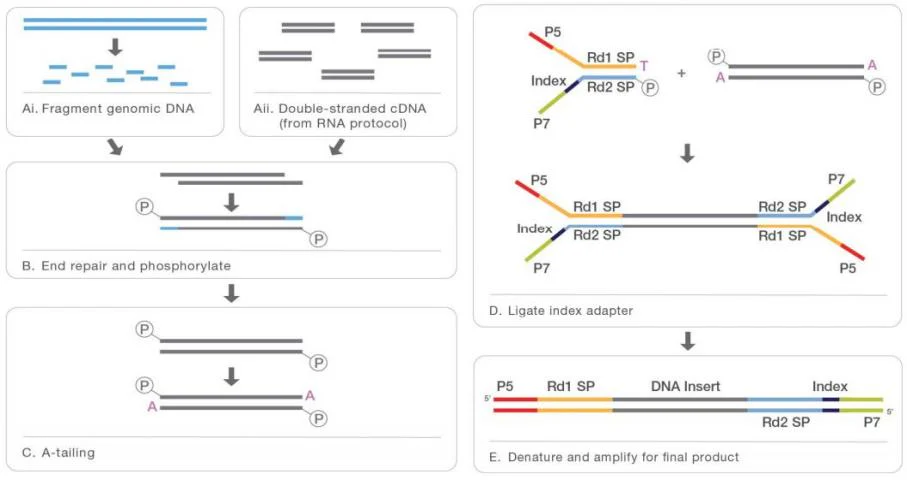
DNA Adapters in Sequencing Library Preparation
DNA adapters are synthetic double-stranded oligonucleotides designed to attach to the ends of DNA fragments during library preparation. Once adapters are ligated, the DNA fragments become compatible with sequencing platforms.
Typical sequencing adapters contain several functional elements:
-
Platform-specific binding sequences
-
Index or barcode regions
-
Sequencing primer binding sites
-
Structural regions required for cluster generation
Educational explanations of sequencing library preparation are available through the National Library of Medicine molecular biology chapters:
https://www.ncbi.nlm.nih.gov/books/NBK21091/
Further descriptions of adapter-based sequencing strategies can be found through the Harvard Medical School genomics education programs:
https://genome.med.harvard.edu/
and the University of Washington Genome Sciences Department research training resources:
https://www.gs.washington.edu/
These academic materials explain how adapter ligation enables DNA fragments to be recognized and sequenced by high-throughput instruments.
PCR-Free Library Preparation Strategies
Traditional sequencing library preparation workflows often include PCR amplification steps that increase the number of DNA fragments available for sequencing. However, PCR amplification can introduce biases that alter the representation of genomic regions.
PCR-free library preparation eliminates amplification steps and instead relies on direct sequencing of adapter-ligated DNA fragments.
Educational discussions of sequencing library preparation strategies are available through the National Institutes of Health genomics resources:
https://www.nih.gov/
Further explanations of sequencing workflow optimization can be explored through the Stanford University School of Medicine genomics programs:
https://med.stanford.edu/genomics.html
and the Massachusetts Institute of Technology biological engineering research resources:
https://be.mit.edu/
These academic resources highlight how PCR-free library preparation improves sequencing accuracy in many genomic applications.

Compatibility with MGI Sequencing Platforms
MGI sequencing platforms use advanced sequencing chemistries designed to support large-scale genomic analysis. PCR-Free DNA Adapters Set 1 is designed to integrate with library preparation workflows compatible with MGI sequencing instruments.
Educational discussions of sequencing technology development are available through the National Human Genome Research Institute genomics research pages:
https://www.genome.gov/research-at-nhgri
University sequencing facilities also provide educational resources on sequencing workflows, such as the Yale Center for Genome Analysis:
https://medicine.yale.edu/ycga/
and the Johns Hopkins University genomics research programs:
https://www.hopkinsmedicine.org/research/
These research programs describe how sequencing adapters enable DNA libraries to interact with sequencing instruments.
Key Features of PCR-Free DNA Adapters
PCR-Free DNA Adapters provide several advantages in sequencing workflows designed to preserve the original structure of DNA samples.
Reduced Amplification Bias
Eliminating PCR amplification helps maintain the original representation of genomic sequences.
Improved GC Coverage
PCR-free methods can reduce biases associated with GC-rich or GC-poor genomic regions.
Enhanced Library Complexity
Direct sequencing of adapter-ligated fragments helps preserve the diversity of DNA molecules within a sample.
Educational discussions of sequencing bias and library complexity can be explored through the National Institute of General Medical Sciences research resources:
https://www.nigms.nih.gov/
and the University of California San Francisco molecular biology programs:
https://biochem.ucsf.edu/
Applications of PCR-Free DNA Adapter Sets in Genomics Research
PCR-free adapter systems are widely used across numerous genomics research applications.
Whole Genome Sequencing
PCR-free library preparation can support whole genome sequencing experiments that require accurate representation of genomic DNA.
Educational information about genome sequencing projects can be found through the National Human Genome Research Institute:
https://www.genome.gov/human-genome-project
Population Genomics
Sequencing libraries prepared with PCR-free adapters can be used to analyze genetic variation across populations.
Further genomic variation research resources are available through the National Institutes of Health genomics fact sheets:
https://www.genome.gov/genomics-fact-sheets
Structural Variant Analysis
PCR-free sequencing workflows are sometimes used in studies involving structural variation and genomic rearrangements.
Educational materials discussing genome structure analysis can be found through the National Center for Biotechnology Information:
https://www.ncbi.nlm.nih.gov/books/
Metagenomics
PCR-free library preparation can also be applied in metagenomic sequencing projects studying microbial communities.
Metagenomics educational resources are available through the National Library of Medicine:
https://www.ncbi.nlm.nih.gov/books/NBK6833/
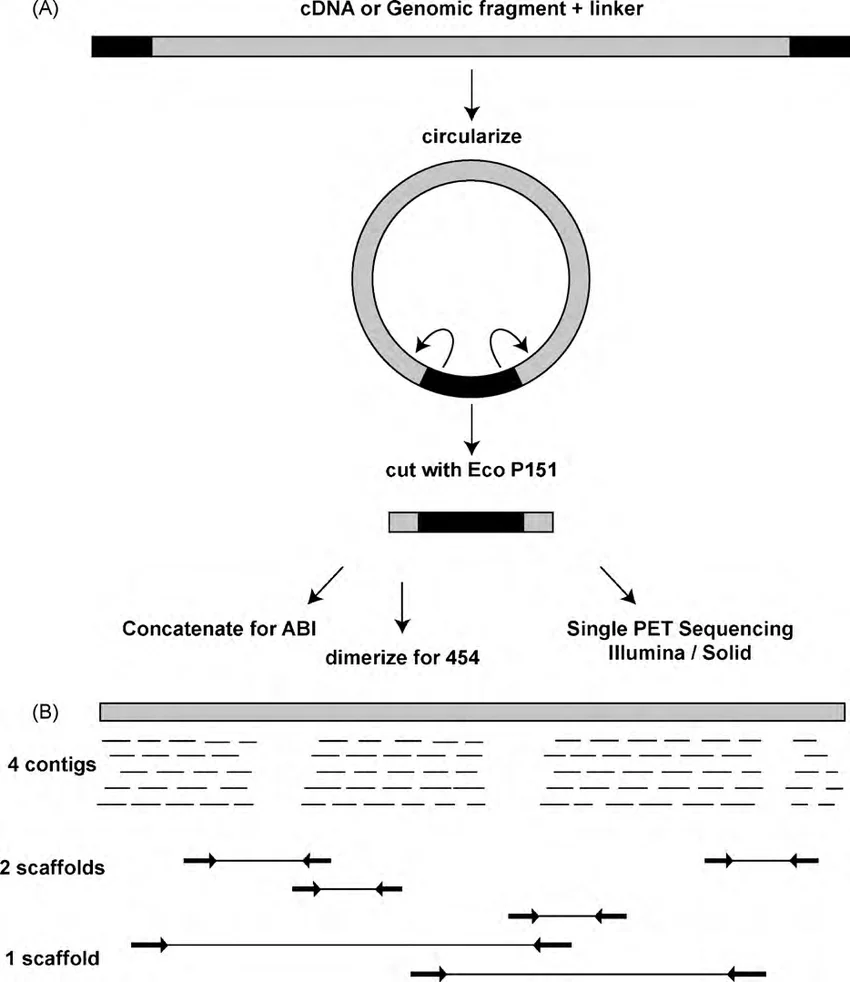
General Workflow for PCR-Free Library Preparation
A typical PCR-free sequencing library preparation workflow involves several steps.
-
Genomic DNA fragmentation
-
End repair and A-tailing
-
Adapter ligation
-
Library purification
-
Library quantification and quality control
Educational discussions of sequencing library workflows are available through the National Center for Biotechnology Information laboratory protocol archives:
https://www.ncbi.nlm.nih.gov/books/NBK53789/
Importance of Adapter Design in Sequencing Experiments
Adapter design plays a critical role in the efficiency and accuracy of sequencing workflows. Adapter sequences must be compatible with sequencing platforms and allow reliable attachment of DNA fragments to sequencing surfaces.
Research on sequencing chemistry and platform compatibility continues to evolve as genomics technologies advance.
Educational discussions of sequencing technology innovation can be explored through the National Institutes of Health genomics programs:
https://www.nih.gov/
Conclusion
The PCR-Free DNA Adapters Set 1 for MGI supports efficient adapter ligation and library preparation in PCR-free next-generation sequencing workflows. By enabling direct sequencing of DNA fragments without amplification steps, PCR-free adapter systems help maintain the integrity and diversity of genomic DNA samples.
As sequencing technologies continue to expand across genomics and molecular biology research, optimized adapter sets remain fundamental components of library preparation workflows and high-throughput sequencing experiments.
PCR-Free DNA Adapters Set 1 for MGI
MGI PCR-free sequencing adapters
DNA adapter ligation kit
PCR-free library preparation adapters
MGI sequencing adapter set
NGS adapter oligonucleotides
PCR-free DNA library adapters
MGI sequencing library adapters